
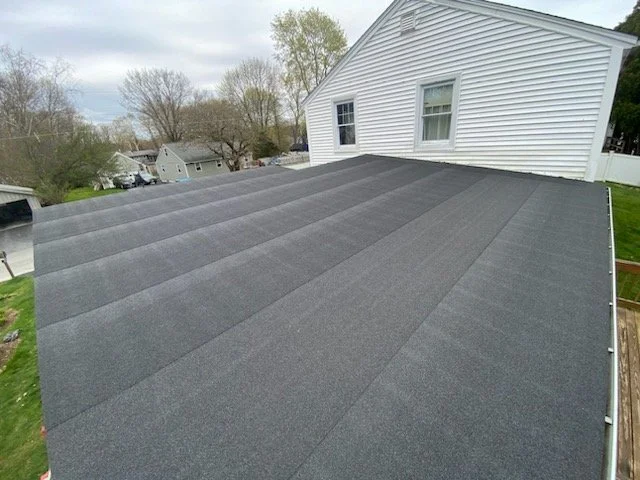
low slope roofing
Not every roof is built with the same pitch and that matters more than most homeowners realize.
Low slope roofing is designed for areas of your home where water doesn’t drain as quickly, like porches, additions, garages, and flat roof sections. These areas require specialized materials that are built for waterproofing, not just water shedding.
What is Low Slope Roofing?
-
Low slope roofing systems
A low-slope roof typically has a pitch of 3:12 or less; it requires a different system than standard shingles to prevent leaks.
-
Built for waterproofing, not just shedding water
Low slope roofing materials create a continuous barrier to protect against leaks, especially important in New Hampshire’s snow and ice conditions.
-
Common in Dover NH homes & additions
You’ll often find low slope roofing on porches, dormers, garages, and home additions throughout the Seacoast area.
-
Specialized materials required
Unlike standard roofing systems, low slope roofing uses membranes and rolled materials designed specifically for these conditions.
Low Slope Roofing Options We Install
-
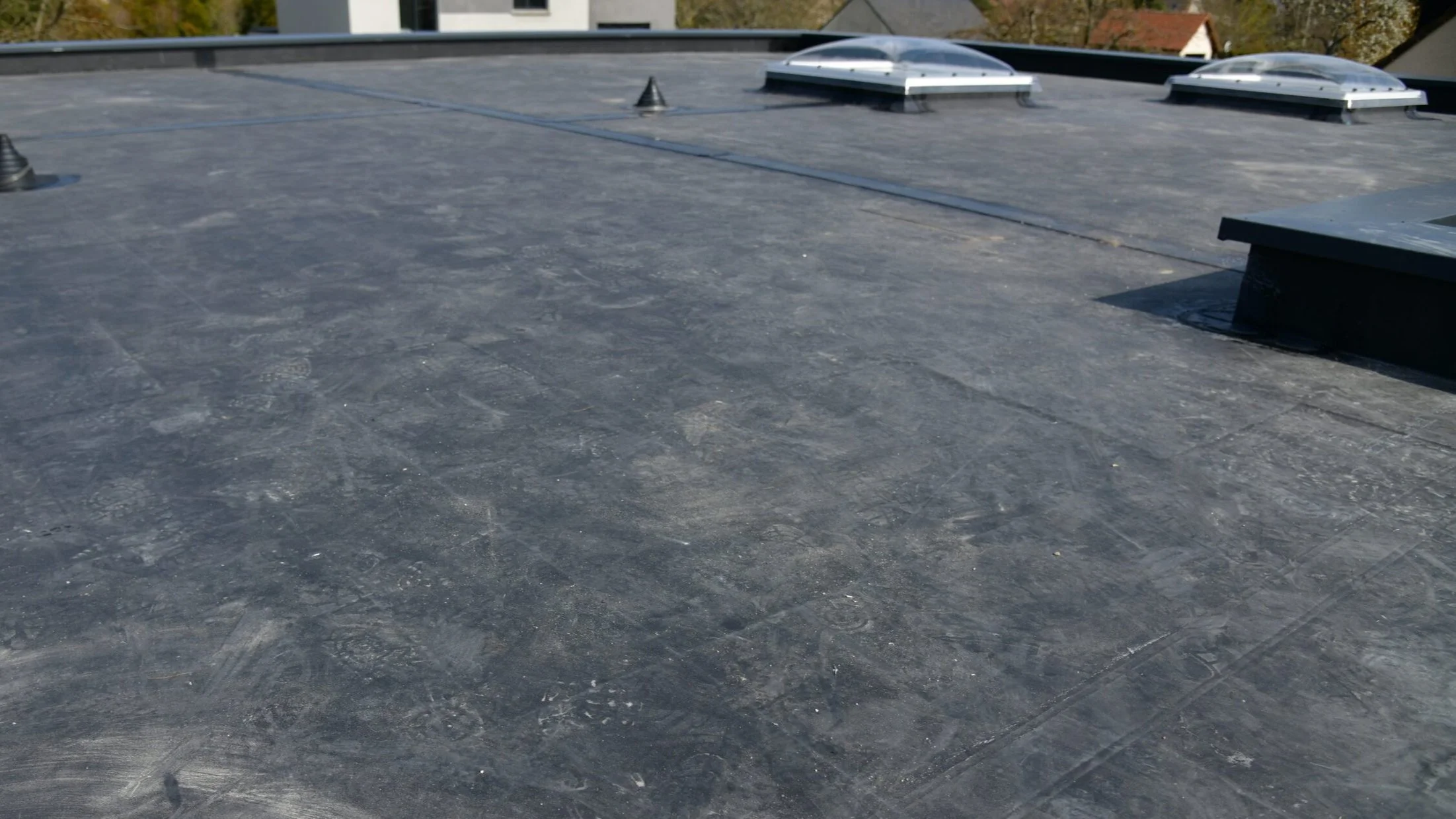
Rubber Membrane Roofing (EPDM)
A high-performance roofing system designed to fully seal and protect low slope areas.
• Made from durable synthetic rubber designed for waterproofing
• Installed in large sheets to minimize seams and leak points
• Flexible material that handles temperature swings without cracking
• Proven long lifespan with minimal maintenance
• Long lifespan (20–30+ years) with minimal maintenance
Rubber membrane systems are one of the most widely used low slope solutions because they provide a continuous waterproof barrier and long-term performance.
-
Asphalt Roll Roofing
A cost-effective solution for smaller low slope areas.
• Budget-friendly roofing solution
• Quick and efficient installation
• Ideal for porches, sheds, and small additions
• Reliable protection for low slope applications
Roll roofing is often used when homeowners in NH need a straightforward, affordable solution for smaller low-slope areas.
Why Low slope roofing matters?
-
Incorrect materials lead to leaks
Using shingles instead of flat or low slope roofing systems can cause serious water intrusion issues.
-
Membrane systems create a sealed surface
Instead of overlapping pieces like shingles, low slope systems are designed to act as one continuous waterproof layer.
-
Every roof is different
Low slope roofing is always installed based on the structure, pitch, and layout of your home; there is never a one-size-fits-all approach.
why homeowners choose prc?
The prc roof replacement process
-
1. Reach Out
After a call/form submission, we’ll ask for a few questions about your roof to get you started.
-
2. Inspection
We take a closer look at your home and figure out exactly what your roof needs.
-
3. Proposal
You’ll receive a clear, easy-to-understand, detailed proposal from our estimators.
-
4. On the books
Once signed, we handle the rest. Scheduling, materials, and logistics… all taken care of.
-
5. Job Day
YAY! Job day is here! Friendly crew, efficient work, most jobs completed in ONE day.
-
6. Clean Up
We do a full cleanup, including a magnet sweep, and leave your property looking great.
FREQUENTLY ASKED QUESTIONS
-
A low slope roof typically has a pitch of 3:12 or less, meaning water drains slower than on standard roofs.
-
EPDM (rubber membrane roofing) is a durable flat roofing system commonly used for low slope roofs due to its waterproofing ability and long lifespan.
-
Shingles rely on gravity and overlap to shed water. On low slope roofs, water can back up and get underneath them.
-
Rubber membrane is a longer-lasting, higher-performance system, while roll roofing is a simpler, more budget-friendly option for smaller areas.
-
Rubber membrane can last 20–30+ years, while roll roofing typically has a shorter lifespan depending on conditions.
-
It’s most often used on specific sections like additions, porches, or garages.
-
Only if certain areas of your roof don’t have enough pitch. A professional inspection will determine the right solution. Call or text us today for a FREE estimate.
It’s time to trust your contractor again…
From your first call to final cleanup, we make the process simple, honest, and done right.